
🎵 Audio guide
The Church of St Ildefonsus dates from the end of the 16th century and as partially reconstructed and enlarged in the 18th century. Built on a cruciform plan with a small raised body above the transept and the bell tower on the south-west corner, it creates a visually exciting play of light and shade.
The bell tower, built in alignment with the facade, contrasts with the building’s general aesthetic. With its ashlar buttresses and set-back walls, it is a product of the expansion in the 18th century. The belfry, with round-arch openings, housing the bell and clock, is crowned with a generous cornice and a parapet.
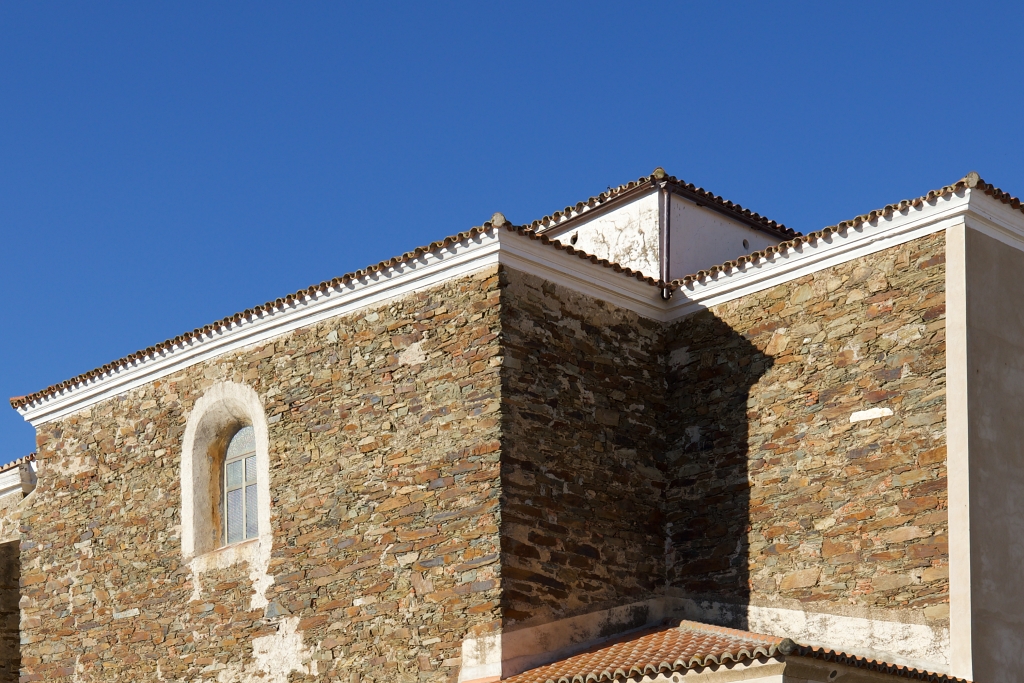
The transept, the part of the nave which forms the cross, is constructed without supporting buttresses, but with two reinforcements which project from the walls in the direction of the nave. The north and south transepts, which have flared round-arched windows are united over the crossing by a small, windowless raised body with a hipped roof.
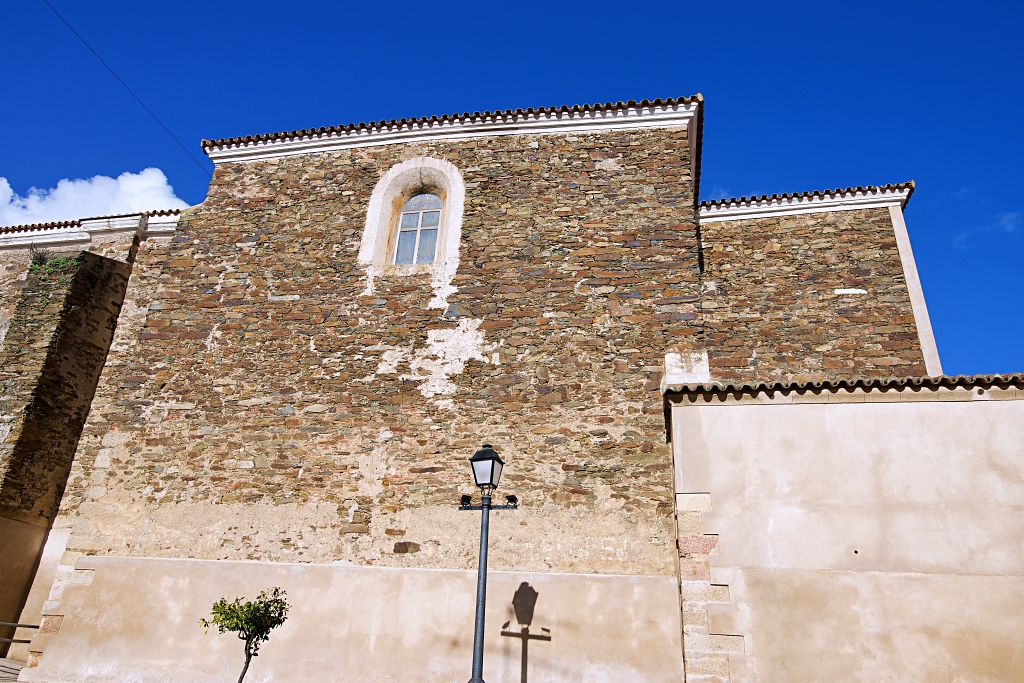
The square-ended chancel is also constructed without buttresses and on the south side is connected to the sacristy. On the north side, there is an old building which is used by the public, built in a similar style to other extensions to the church, located between the buttresses.
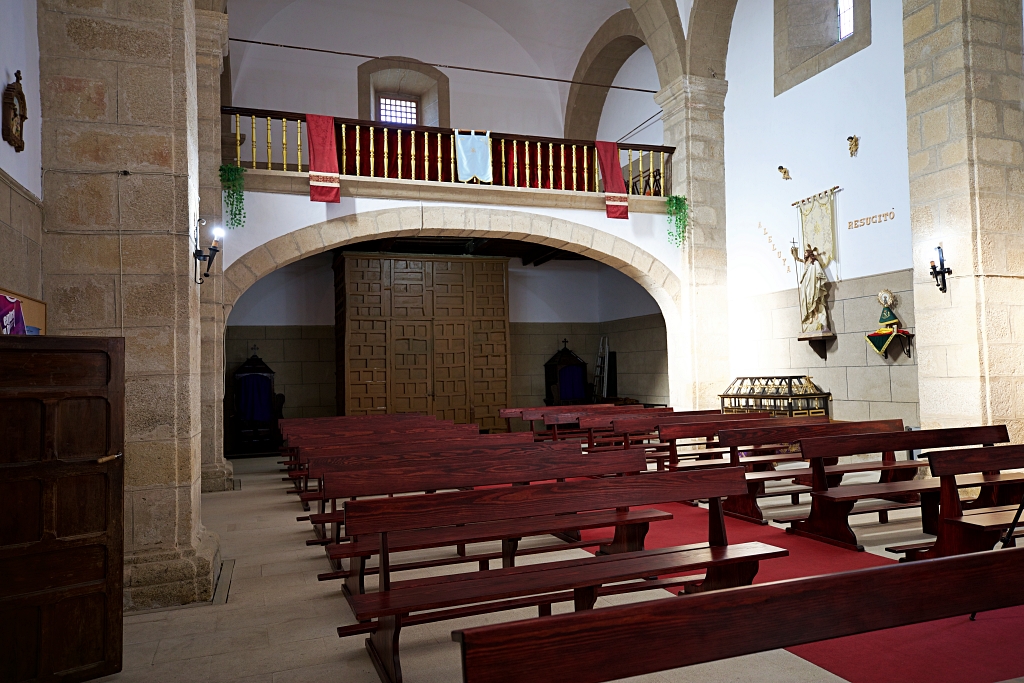
The main entrance to the church brings us into the area under the choir loft, supported by a wide elliptical arch made of ashlar masonry. The baptistery is at the bottom of the bell tower and, beside it, there is a small chapel. After the simplicity of the exterior, the interior of the church surprises and impresses, with its large pilasters and arches.

During the 18th century reconstruction and extension, in order to raise the height of the church, a new, independent load-bearing structure was created – large ashlar pilasters adjoining the original walls – which allowed for the construction of windows in these walls.
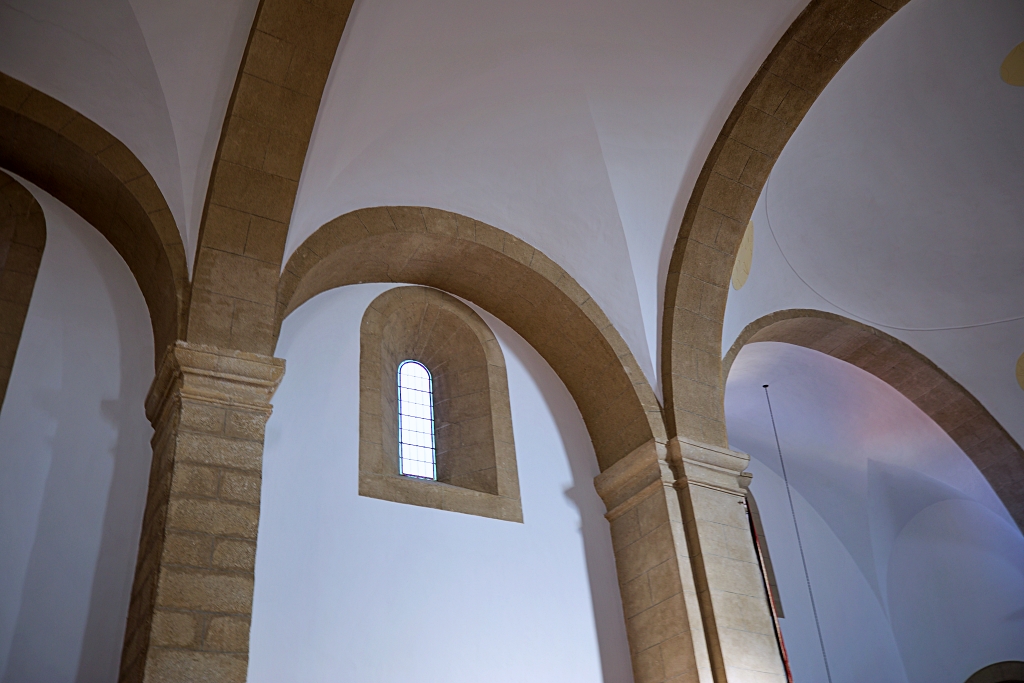
The pilasters are joined by heavily accentuated round arches and the spaces between them are covered by barrel vaults with lunettes, similar to the groin vaults which were traditionally typical of this area. The crossing is covered by a pendentive dome.

On the gospel side, there is a beautiful worked granite pulpit whose stairs descend into the north transept. There are two niches in the chancel-side walls of the transept and two more, facing each other in the end walls. On the epistle (south) side there is a small wooden altarpiece.
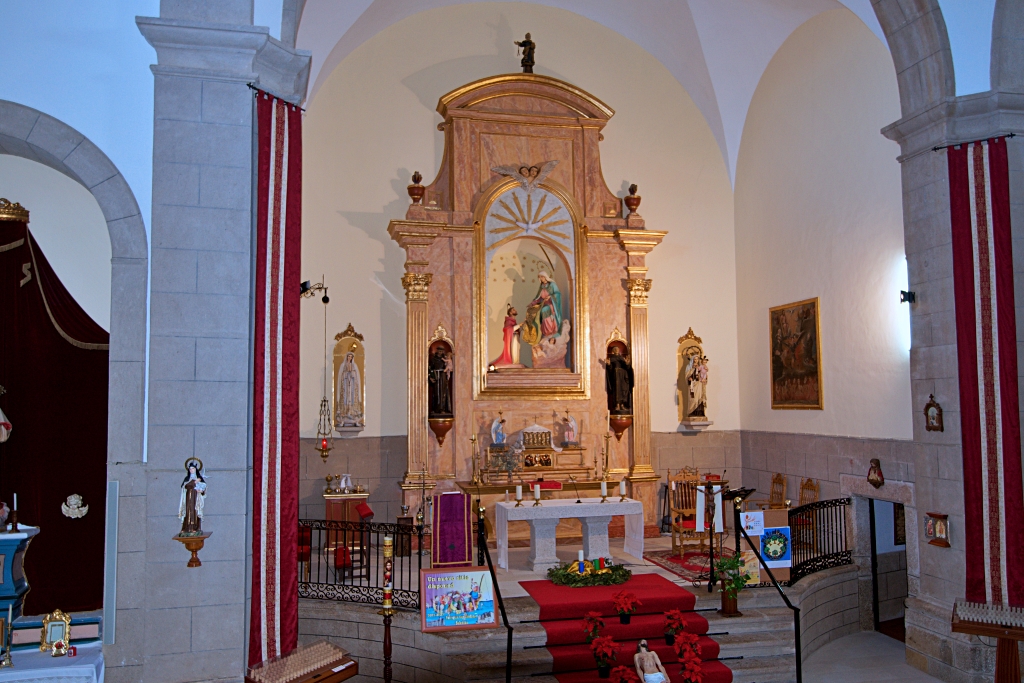
In the main chapel the presbytery is raised on stone steps. The main altarpiece is made of stone and displays a 17th century image of Saint Francis. On the south side of the chancel there is an architrave opening leading to the sacristy, which is covered by a beautiful groin vault.
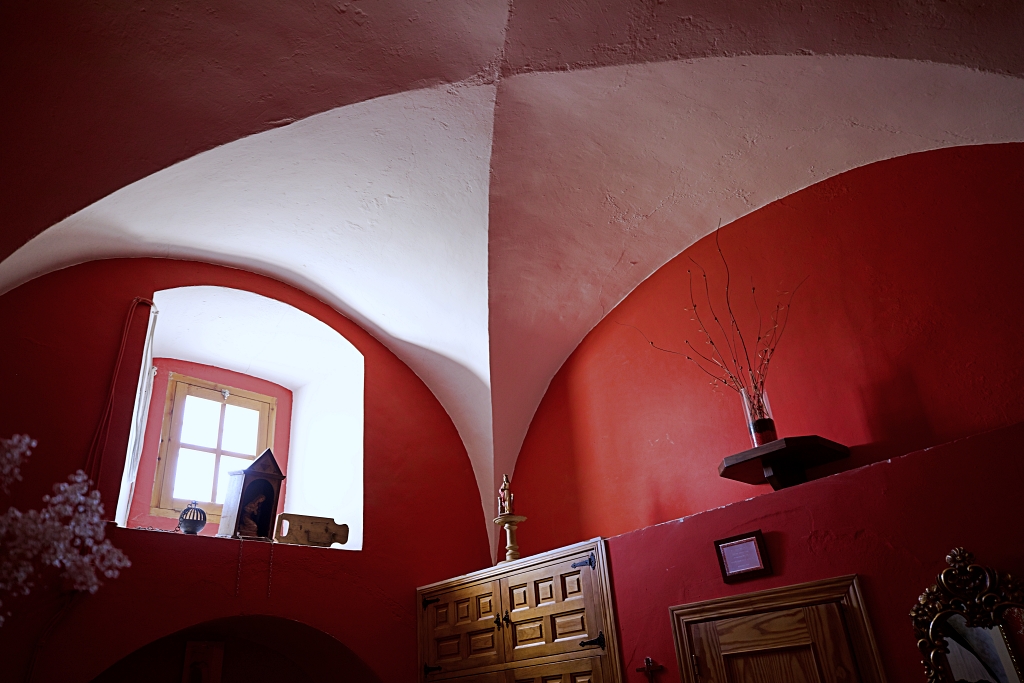
In the main chapel the presbytery is raised on stone steps. The main altarpiece is made of stone and displays a 17th century image of Saint Francis. On the south side of the chancel there is an architrave opening leading to the sacristy, which is covered by a beautiful groin vault.